


May 25, 2026
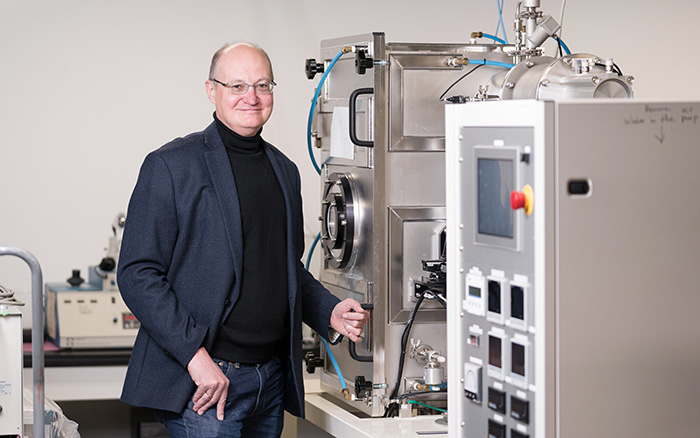
Dr. Dmitri Louzguine, the corresponding author of this research paper
Precipitation hardening is one of the most well-established strengthening mechanisms in metallurgy. When small particles form within a metal's matrix, they obstruct dislocation movement and dramatically increase strength.
Yet some β-titanium alloys present a puzzling exception: despite achieving ultrahigh compressive strength, they show none of the precipitate particles that should explain such behavior.
“With no visible precipitates or secondary phases in the β-Ti matrix, the microstructure of these alloys appeared essentially homogeneous,” explains Dmitri Louzguine, lead investigator of an AIMR research team. “This made it difficult to explain how such materials can achieve ultrahigh strength despite lacking the usual strengthening mechanisms.”
Understanding what produces this strength is important, as these alloys combine record strength with good biocompatibility and no toxic elements, making them prime candidates for biomedical implants and other demanding structural applications.
In a 2025 article, Louzguine and Greer from AIMR investigated the atomic structure of a Ti82Fe12Sn3Nb3 alloy using advanced electron microscopy techniques1. By probing beyond conventional imaging limits, the team identified subtle forms of atomic ordering that help explain the observed mechanical properties.
The team combined high-resolution transmission electron microscopy with aberration-corrected scanning transmission electron microscopy and energy-dispersive X-ray spectroscopy to map spatial variations in elemental distribution. This enabled them to detect diffuse scattering and nanoscale variations in atomic column intensity associated with short-range chemical and topological ordering.
“Our measurements found that the alloy consists of a supersaturated β-Ti solid solution containing chemically ordered clusters analogous to Guinier–Preston zones, but at an even smaller length scale,” says Louzguine. “These clusters, exhibiting ω-phase-like short-range order, impede dislocation glide by increasing lattice resistance, thereby producing ultrahigh strength without forming detectable precipitates.”
These findings demonstrate that short-range ordering, rather than conventional phase transformations, can dominate strengthening in β-Ti alloys. This insight provides a new design principle for developing high-performance titanium alloys by engineering atomic-scale ordering to enhance strength while retaining good plasticity.
The team aims to extend this concept beyond titanium alloys—exploring whether short-range ordering plays a similar role in high-entropy alloys and other complex alloy systems, and developing processing routes to deliberately generate such ordering for optimized mechanical performance.
This work was made possible through collaboration among Tohoku University, AIST, Osaka University, The University of Tokyo, NIMS, Istituto Italiano di Tecnologia, and the University of Cambridge, whose complementary expertise and facilities were essential to the project.
The most surprising moment came when diffuse scattering in the electron diffraction patterns matched the positions expected for ω-type phase. However, the dark-field images created using those diffuse reflections were completely featureless. No precipitates, no contrast was visible at all. At first, we suspected the formation of nanoscale ω precipitates, but the absence of any dark-field contrast forced us to reject that explanation. The breakthrough came when my colleague Yurii Ivanov overlaid the atomic-resolution HAADF-STEM image with the EDX maps of Fe and Ti and noticed clear intensity variations in the atomic columns. Then, short-range ordered clusters become finally visible as subtle brightness variations, hidden in plain sight within what had appeared to be a simple solid solution.
(Author: Patrick Han)
This research highlight has been approved by the authors of the original article and all information and data contained within has been provided by said authors.

 Research Highlights